Masking a Car Before Spray Painting: Why It Matters
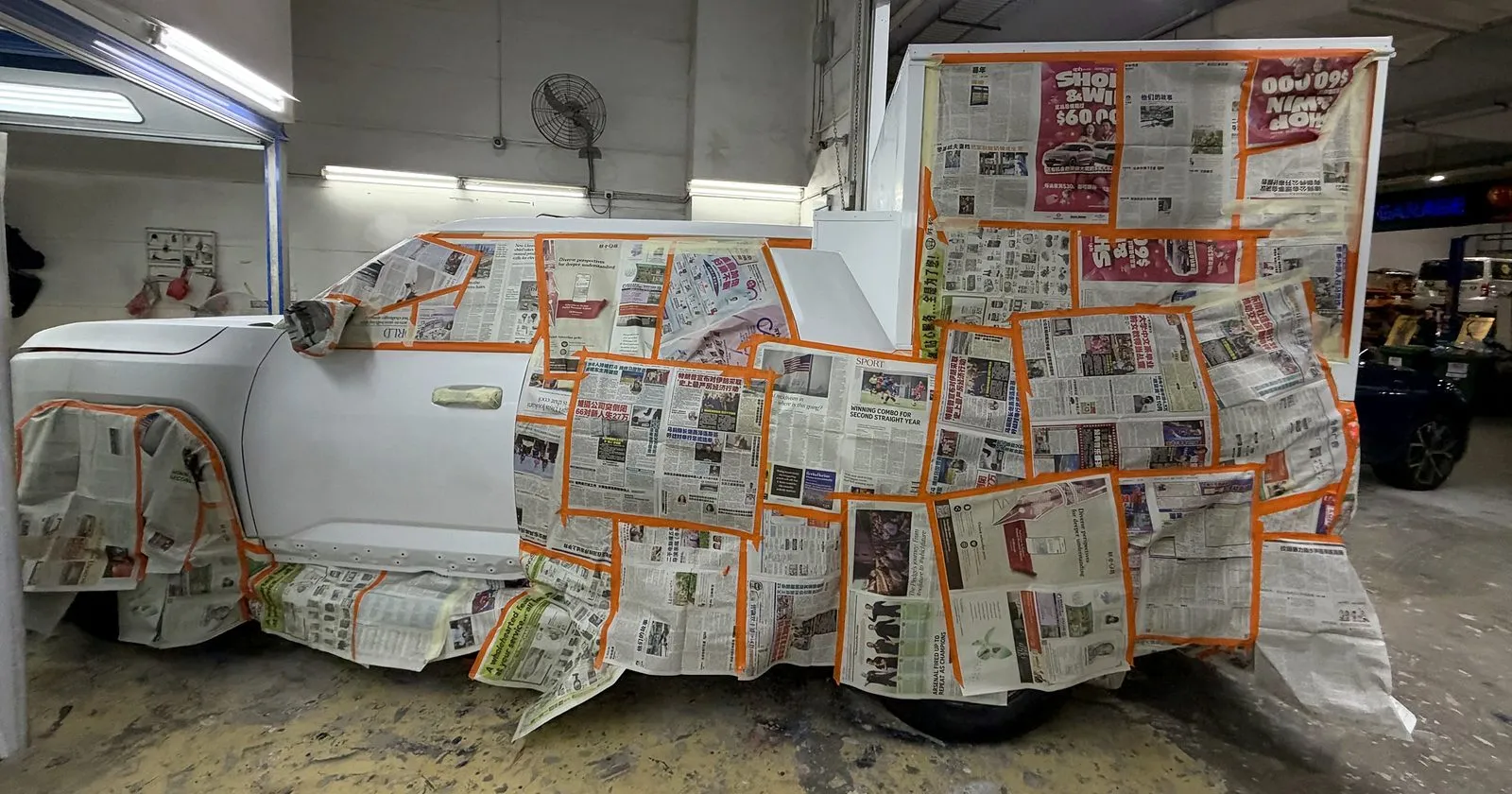
Before a single drop of paint is sprayed, a car spends a surprising amount of time being masked: carefully covered so paint only lands where it should. It’s one of the least glamorous parts of Singapore car spray paint work, and one of the most important. Good masking is the difference between crisp, factory-looking edges and overspray on your windows, rubber seals and lights.
What is masking?
Masking means covering every part of the car that shouldn’t be painted, using:
- masking paper, to cover large areas like windows, wheels and neighbouring panels;
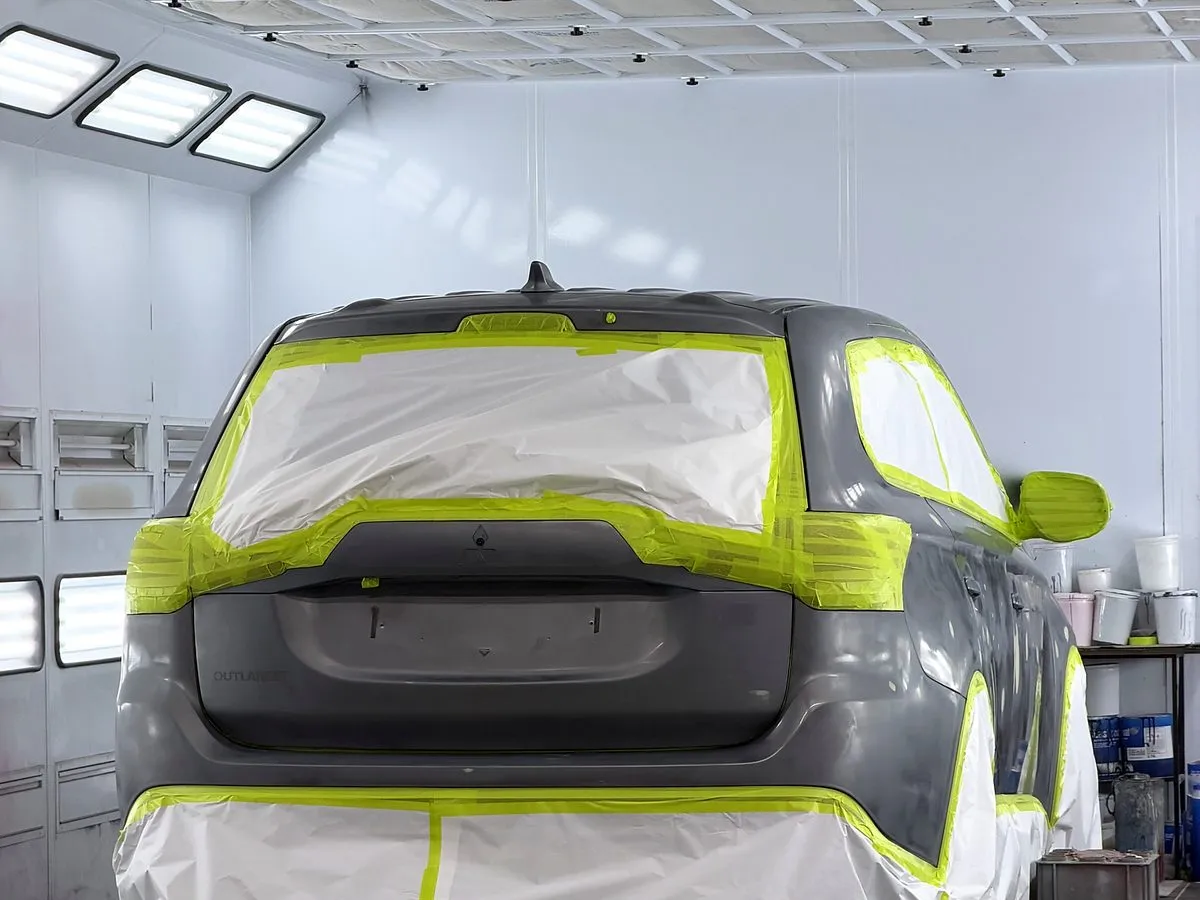
- masking film, a thin plastic sheet that drapes over the whole car to keep overspray off;
- masking tape, including fine-line tape, to create sharp, clean paint edges;
- wheel and tyre covers, to keep overspray off rims and rubber.
Why masking matters so much
Crisp, clean edges
Where new paint meets glass, rubber or trim, the line has to be sharp and straight. Careful taping produces edges that look like they came from the factory.
No overspray
Paint mist travels. Without proper masking it settles on glass, chrome, rubber seals and tyres, leaving a rough, dusty film that’s hard to remove. On a full respray, the entire car is covered except the panels being painted.
Protecting parts that can’t be removed
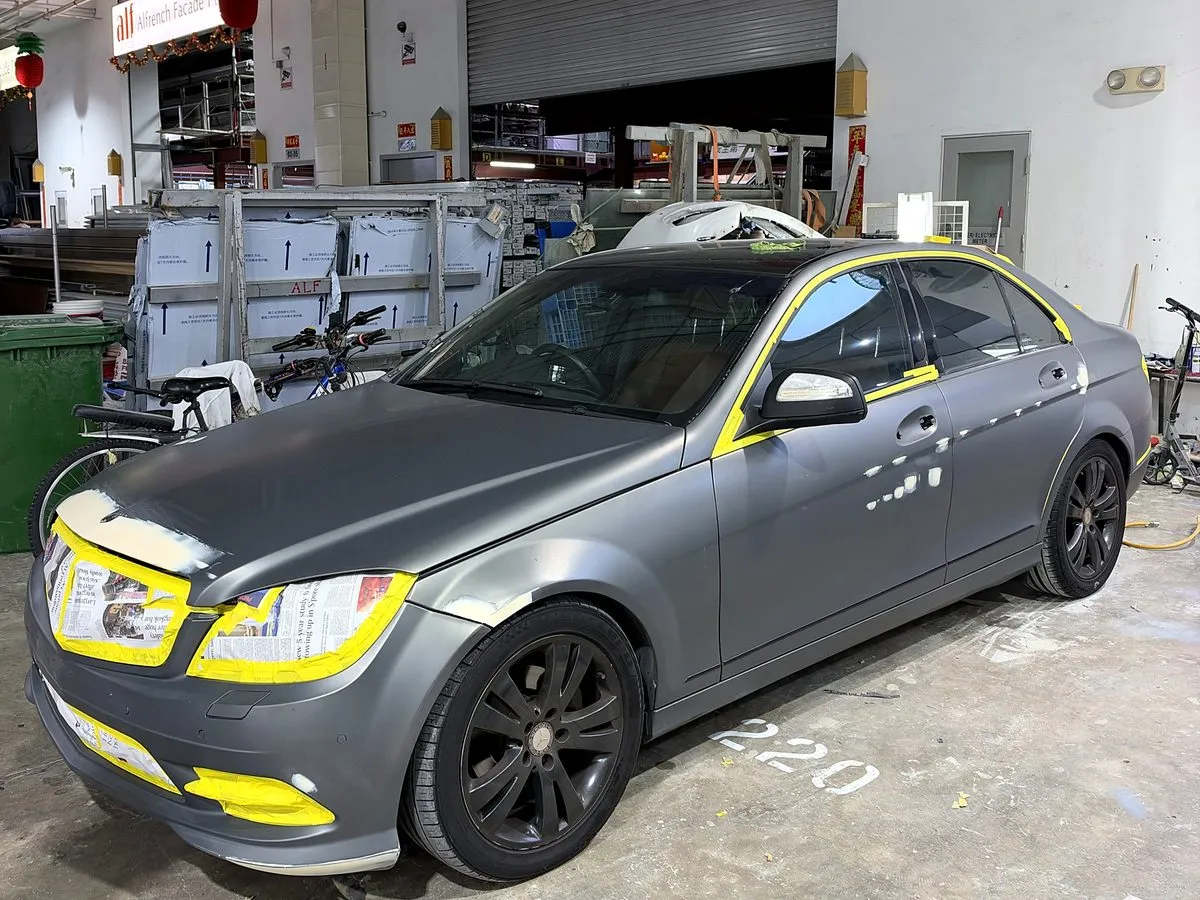
Where lights, badges and trim can be removed safely, we remove them for the cleanest result. Where they can’t, they’re masked precisely, so the new paint still runs neatly up to them.
Masking for panel repairs vs full resprays
- Panel repair: we mask the surrounding panels, often leaving room to blend the new colour into the neighbouring panel, so the repair is invisible.
- Full respray: windows, lights, wheels, rubber and the engine bay are all protected, and door shuts may be masked or painted depending on the job.
- Colour change: masking is even more detailed, because door shuts, the boot and other visible edges are usually painted too, so no old colour shows.
Signs of poor masking to watch out for
When you collect a car from any workshop, check for:
- paint on window rubbers or seals;
- overspray “dust” on glass, chrome or tyres;
- wavy or rough paint edges around lights and trim;
- paint on badges or emblems.
Good masking takes time, which is one reason a quality respray can’t be rushed.
Part of our step-by-step process
Masking is step 3 of how we respray a car. After masking comes prep and primer, then colour and clear coat in our spray booth.
Need a respray or panel repair? WhatsApp us a photo for a free quote, or request a quote here.