Mercedes CLA Colour Change: White to Satin Black
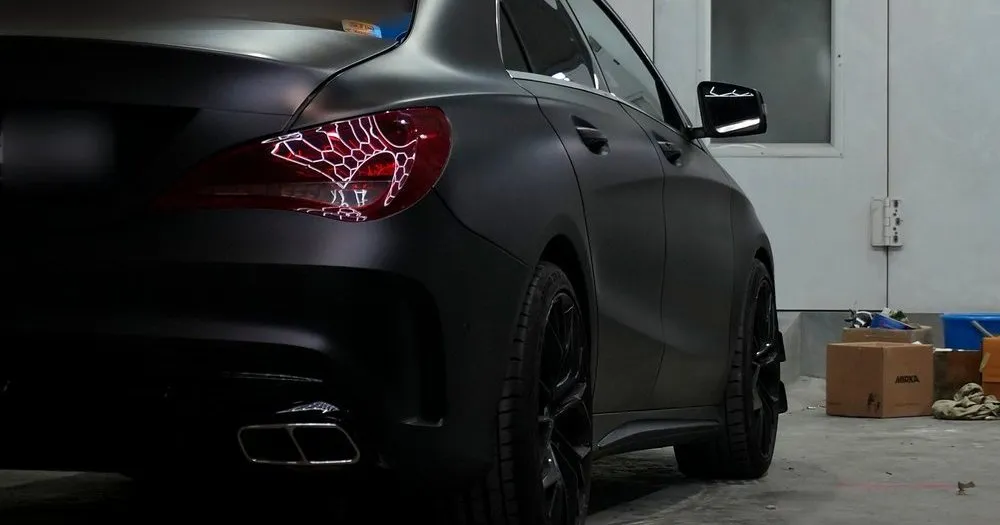
The Mercedes-Benz CLA has one of the sleekest silhouettes in its class: a four-door coupé with a low, arching roofline. This CLA200 came to our workshop in white, with a body kit in grey primer. It left in satin black, a finish that completely changes its character.
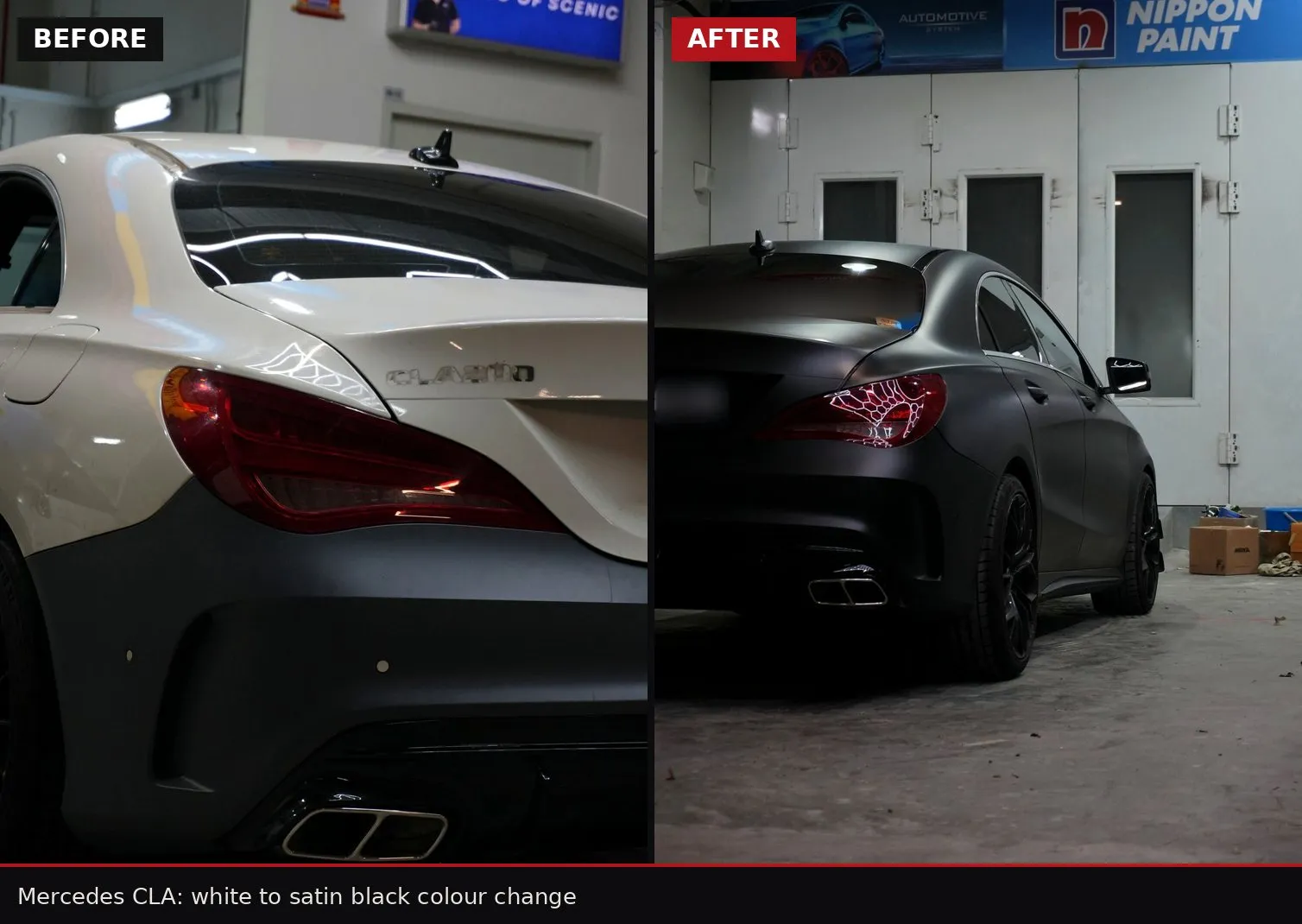
Why satin black suits the CLA
White makes a car look clean and bright, but it flattens curves. Satin black does the opposite. Its low-sheen surface softens reflections, so light rolls gently across the bodywork instead of bouncing off it. On a car with the CLA’s flowing lines, that makes the shape look more sculpted and more aggressive at the same time.
Satin black also ties the whole car together. The body kit, grille, wheels and trim now blend into one dark, purposeful look, while the rear lights glow against the paint. It’s a stealthy, high-end finish that turns heads precisely because it’s understated.
Satin vs gloss vs matte
- Gloss is the classic factory finish: mirror-like, deep and easy to polish.
- Satin sits in between: a soft, silky sheen with gentle reflections. It’s popular for colour changes because it looks premium without the harshness of a flat finish.
- Matte has almost no reflection, for the most dramatic look, but it’s the hardest to maintain.
What went into this colour change
A white-to-black colour change is one of the most demanding jobs in car spray painting, because any trace of the old colour stands out immediately. The work included:
- prepping and sanding every panel, including the body kit, which was primed and blended into the bodywork;
- removing or masking trim, lights and badges so edges stay crisp;
- painting door shuts and visible edges so no white shows when doors or the boot open;
- applying the black base coat and a satin clear coat evenly, which is critical, because satin finishes can’t be polished to hide unevenness;
- baking the car in our spray booth to cure the finish.
How to care for satin or matte paint
Satin paint needs slightly different care from gloss:
- Don’t polish or wax it. Abrasive polishes and waxes add shine and leave shiny patches.
- Hand wash only, using a pH-neutral shampoo made for matte or satin paint.
- Avoid automatic car washes, since their brushes can create glossy spots.
- Clean bird droppings straight away. They etch quickly in Singapore’s heat.
- Consider a matte-specific ceramic coating. It protects the paint without adding gloss.
How we do a respray at our workshop
Every Singapore car spray paint job at our Bukit Merah and Kaki Bukit workshops follows the same careful process:
- Inspect the car under strong light and agree the scope with you.
- Wash and degrease to remove wax, silicone and road grime.
- Remove or mask lights, trim and badges for crisp, clean edges.
- Repair and sand: straighten dents, treat scratches and sand the surface so new paint bonds properly.
- Prime repaired areas and block-sand them smooth.
- Colour match using your paint code, adjusted to your car’s actual colour.
- Spray the base coat and clear coat in our dust-controlled spray booth.
- Bake to cure the paint into a hard, durable finish.
- Polish, reassemble and inspect every panel before handover.
Read the full step-by-step guide: how we respray a car.
How much does a colour change cost?
Full car resprays start from $1,800. Colour changes, satin finishes and body kit work are quoted after we’ve inspected the car. See our car respray cost guide for the details.
Want a satin finish on your car?
WhatsApp us a photo of your car with the colour and finish you’re thinking of. We’ll tell you what’s involved and give you a free quote, or you can request a quote here.